Kettle and inbox
Cold floors and a warming room call for layers you can shed. A brushed-back sweatshirt over a soft vest or long-sleeve tee works well: when the heating catches up, the sweatshirt comes off and you still look put together.
Clothes for the stretch between waking up and deciding what the day is going to be.
Explore a Softer Day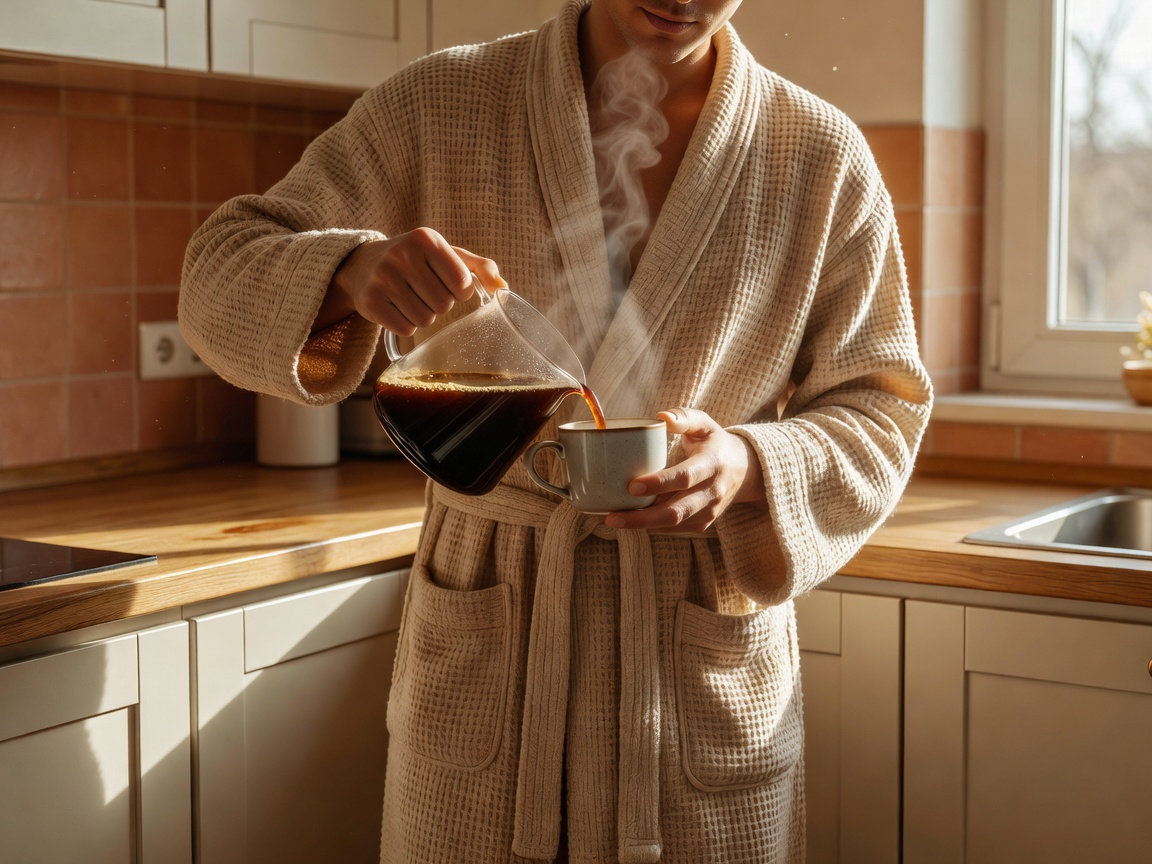
The lead scenario
Home days rarely follow a script. You might be answering messages before you have found your socks, or you might have a slow, kettle-first start that stretches until eleven. Either way, what you put on in the first hour quietly decides how many times you will change before bedtime.
Our rule of thumb: dress for the most public moment you can reasonably predict. If a courier, a neighbour or a camera might appear, start with something that can handle them.
Cold floors and a warming room call for layers you can shed. A brushed-back sweatshirt over a soft vest or long-sleeve tee works well: when the heating catches up, the sweatshirt comes off and you still look put together.
Sitting cross-legged exposes every flaw in a waistband. Look for flat or covered elastic, a rise that does not dig in when you fold, and a straight leg with enough room at the knee.
Video calls only see your top third. A collared knit polo, a fine-gauge crewneck or a soft button shirt in a solid tone gives you a tidy frame. Busy prints flicker on webcams; plain textures do not.
Swap only your top after lunch. It is a small marker that the day has moved on, it refreshes how you feel about your outfit, and it keeps crumbs from the morning out of the evening.
The difference between homewear that feels lovely and homewear that feels a bit defeated usually comes down to silhouette. Clothes that have lost their shape, sag at the seat or twist at the side seams make you feel sloppier than you are. Clothes that keep a clean line, even very relaxed ones, make the same lazy morning feel deliberate.
Start with proportion. A slouchy top looks best over a trouser with some definition: a straight-leg jogger with a crisp front crease, a knit wide-leg that falls to the ankle, or a cuffed pant that gathers neatly at the shoe line. If both halves are oversized, try tucking a corner of the top into the waistband or pushing the sleeves to the elbow. It is a small adjustment that adds a waist back into the picture without asking anything of you.
Necklines matter more at home than you might expect, because you spend a lot of time leaning forward over laptops, sinks and books. A crew neck stays put. A wide boat neck slides off a shoulder, which is charming once and irritating by noon. Hoods are cozy, but a heavy hood pulls a sweatshirt backwards when you sit against cushions; a hoodie with a lighter, lined hood sits more evenly.
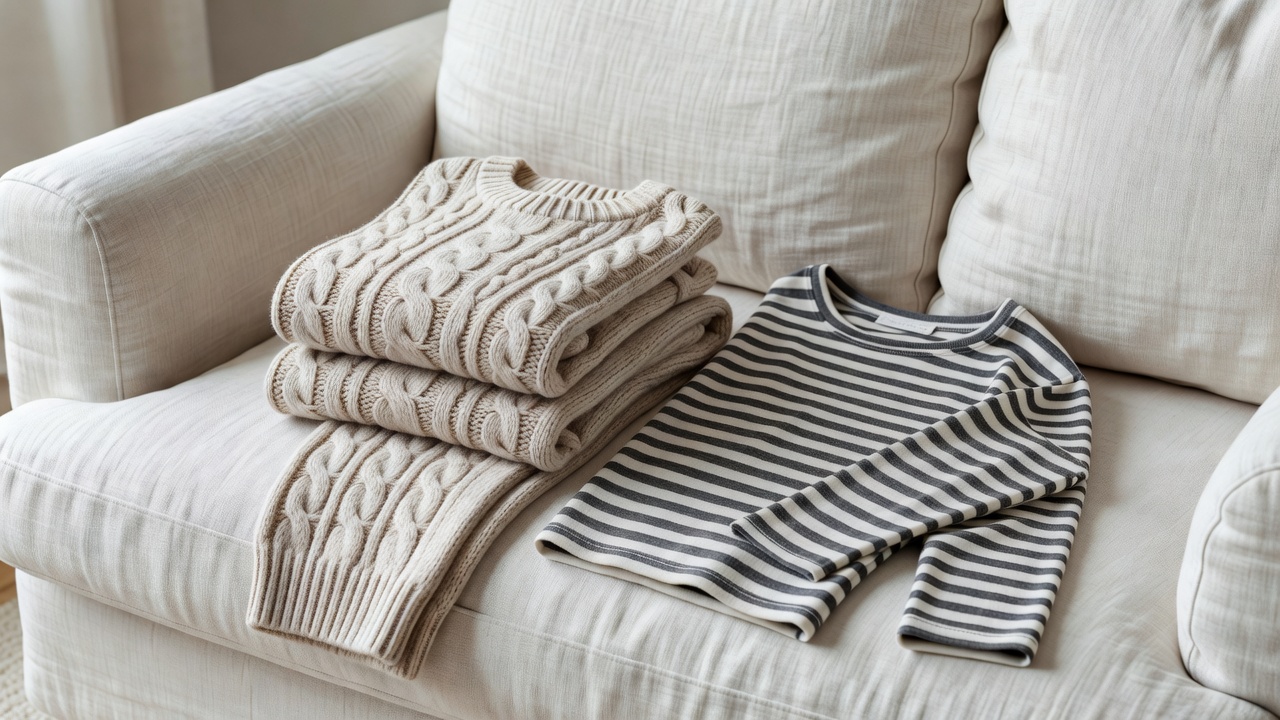
Homes are full of microclimates. The kitchen warms up when the oven is on, the spare room stays chilly, and the spot by the window shifts with the sun. Instead of one heavy layer, think in thin, easy ones. A breathable base like cotton jersey or modal sits against the skin. A middle layer, such as a light merino crew or a French terry sweatshirt, holds warmth. A loose outer piece, like a long cardigan, shawl-collar robe or quilted gilet, goes on and off without much thought.
Socks and slippers are part of this system too. Wool-blend socks with a little nylon for strength keep their shape longer than pure cotton, and a slipper with a firm sole means you can step into the garden or onto the doorstep without a full footwear decision.
If you work, study or create from home, it can help to have one visual signal that separates on-duty from off-duty. It does not have to be a whole outfit. It might be the knit polo you only wear during working hours, a pair of earrings, or simply the act of putting on a watch. When the signal comes off in the evening, the same soft trousers suddenly feel like rest clothes again. We are not promising this changes your mood; plenty of readers simply find it a tidy way to mark time in a home that does many jobs.
You do not need a drawer full of loungewear. A practical rotation for most people looks something like this: two pairs of soft trousers in different weights, three tops that can be layered, one warmer mid-layer, one robe or long cardigan, and something you would happily open the door in. Choose colours that all work together, such as oatmeal, charcoal, terracotta, olive and cream, and almost any combination will look considered.
When you buy, sit down in the changing room or at home before removing tags. Cross your legs, reach for an imaginary mug, lean back. Clothes for the home hours should pass the sofa test before the mirror test.
Ready to take those same pieces past the front door? Our next guide, Take Soft Clothes Outside, shows how. For what makes each fabric behave the way it does, read What Softness Is Made Of.