Fibre first: where softness starts
Every soft garment begins with a fibre, and fibres fall into three broad families. Natural plant fibres, mainly cotton and linen, come from seeds and stalks. Natural animal fibres, such as merino wool, cashmere and alpaca, come from fleece. Manufactured fibres include regenerated cellulose like viscose, modal and lyocell, made from wood pulp, and synthetics like polyester and nylon, made from petroleum or recycled plastics.
Longer fibres generally feel smoother and pill less, because there are fewer loose ends to work their way out of the yarn. That is why long-staple cottons, sold under names such as Pima and the trademarked Supima for American-grown Pima, are popular for premium tees. Merino is prized because its fibres are fine enough to sit against skin without the prickle people associate with older wool jumpers.
Regenerated fibres deserve a special mention in loungewear. Modal is known for its silky, cool feel and is common in sleep tees and lounge trousers. Lyocell, best known under Lenzing's TENCEL brand, is produced in a closed-loop process that recovers most of its solvent. Both drape beautifully, which is lovely at home and slightly less forgiving in public if the cut is close.
Knit structure: how the yarn is built into fabric
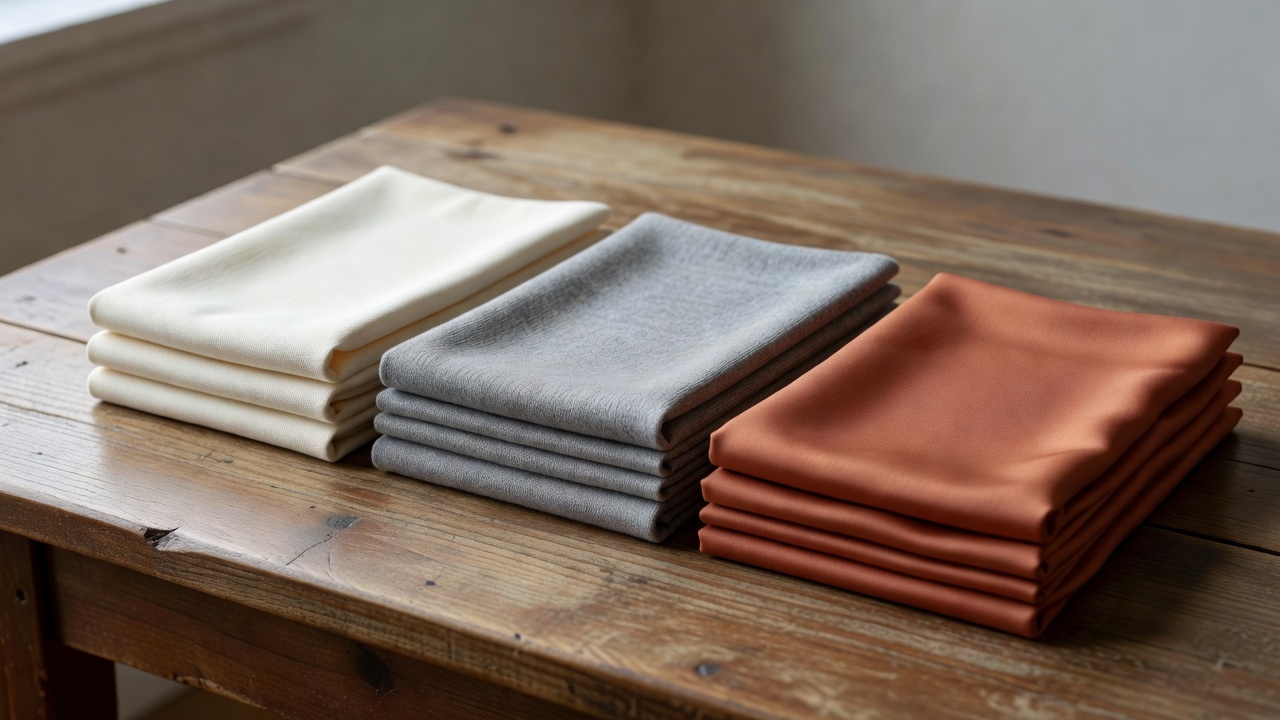
Most loungewear is knitted rather than woven, which is where the stretch and give come from. Single jersey, used for tees, is smooth on the face and has little loops on the back. Rib knit has visible vertical lines and stretches widthways, which is why it is used for cuffs, waistbands and fitted lounge sets. Interlock is a double-knit that looks the same on both sides and resists curling at the edges.
French terry is jersey with extra yarn looped on the reverse. Leave those loops alone and you get loopback terry, which is breathable and keeps its shape. Brush them up and you get fleece-backed sweatshirt fabric, which traps more warm air but sheds and pills more easily. Waffle knit, common in robes and thermal tops, uses a grid of raised cells that creates texture without much weight.
Some makers still use traditional loopwheel knitting machines, which produce tubular fabric slowly with very little tension. Wakayama in Japan is particularly well known for this, and loopwheel sweatshirts are valued for keeping their shape over many years. You do not need heritage fabric to have a good sweatshirt, but it shows how much construction matters.
Weight and opacity
Knit weight is often listed in grams per square metre (gsm). As a rough guide, tees around 140–160 gsm feel light and can be sheer in pale colours; 180–220 gsm tees feel substantial and work better outside. Sweatshirt fabric commonly sits between 280 and 400 gsm. Heavier is not always better: a 400 gsm hoodie is wonderful on a cold Sunday and too much for a warm kitchen.
Opacity also depends on colour and density. Darker colours hide more, and tightly knitted fabric with a smooth face reflects light rather than letting it through. When shopping online, product photos taken against a window or with a hand inside the fabric are helpful clues.
Reading labels and certifications
A few widely recognised labels help you understand what you are buying. OEKO-TEX STANDARD 100 means a product has been tested for a list of harmful substances. The Global Organic Textile Standard (GOTS) covers organic fibre content and processing requirements through the supply chain. The Woolmark logo indicates wool quality standards set by The Woolmark Company, and Responsible Wool Standard (RWS) focuses on animal welfare and land management. These labels describe specific things; none of them alone means a garment is perfect, so read what each one actually certifies.
Textile regions offer another clue. Guimarães in northern Portugal is known for jersey and knitwear production, Biella in Italy for fine wool, and Prato for its long history of recycling wool fibres into new cloth. For how to look after these fabrics, continue to Keep the Easy Feeling, or see them in action in Take Soft Clothes Outside.